Recruiting In 3D

Thanks, But No ^#$%&* Thanks!

When you are a recruiter, you get to see all sides of human nature, and all the accompanying emotions. When people get the job, there is elation. When they don’t dejection. You get to see kindness, competitiveness, nervousness and aloofness. While all these things are great and each have their own place, I feel the need to highlight my favorite….stupidity.

I devote a short bit of time (and catharsis) occasionally here at RI3D to the absurd, amazing and usually unbelievable snippets of things recruiters hear. As comedian Ron White says, “You Can’t Fix Stupid”.

Maybe we should have hired that guy after all?
Some of the things that fall into the YCFS category are the things that people write back after being rejected for a job. Look, I get it…..the job market is tough, and you’ve applied to 200 jobs (of which you are qualified for all of them, I know) and I’m just the next recruiter to stand in your way. But there is a graceful way to reply to a rejection, if you feel so compelled to respond to it. Below are two examples of how NOT to respond. Recruiters get hours of entertainment out of these. I hope you get a laugh or two.

  • “LOL I am more than qualified good luck to u”
  • F$ck offSent from my Verizon Wireless BlackBerry

I’d put each of these in context, but, well this is all they wrote. At least I don’t know which cell phone company the first person uses.

Yes friends, the old saying goes, “you can pick your friends, you can pick your nose, but you can’t pick your friend’s nose”. But, you can pick your choice of words.  Aside from the obvious lack of salutations that most professional e-mails tend to contain (what? I embraced my geekdom long ago) and the “sentences” written in “Textglish”, these are pretty funny. I mean, unless you are the angry person who wrote it.

So, if you need to respond, then do so with a little dignity and tact. And maybe one or two less F-bombs.

But then again, those are funny.

If you look close, you can see the Medulla Expletive

Personal Branding – More than just “vanilla”

I had the opportunity to co-write a post with Susan Strayer on her site about personal branding. I think it’s about time we put what that is into perspective. I think we’ve covered a great deal of bases and I hope you have some time to take a look.  You can find the post here.

If you don’t know Susan, and/or have not had the pleasure of working with or talking to her personally, I can tell you that there are few people in the business that have as deep a scope of knowledge as she does. I’m honored to have had a chance to collaborate with her.  Be sure to follow her on Twitter  – she has two handles: @SusanDStrayer  and @DailyCareerTips


Bookmark and Share

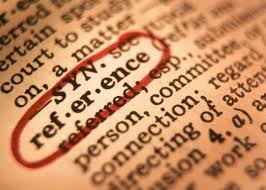
References: What you need to know

So you’ve gone through the application process, mastered the interview, and now the company is interested in you. But before you can embark on stepping up to take your new boss’ job (I kid,….sort of) you need to come up with some references so that the company can do it’s due diligence to see if 3rd parties will concur what they think they already know about you.

So here’s where you come in. Who do you select to be a reference for you? The simple answer here is that you should use former supervisors or other people who managed you, in order to be able to best demonstrate certain things. Your former bosses can typically be a future employer’s best source for how well you performed your job, how easy you were to work with or collaborate with, and what kind of potential you may have with the work you do, or what you could expand into in the future. They say that past behaviors are the best indicator of future behavior – take that for what you’d like, but this is how most employers see it.

Simple, right? Not so fast.

You really need to carefully select and vet the references that you give to a prospective employer. You should really be doing this prior to embarking on any interview process. Assumptions on who will give you a positive reference are a dangerous track to take. It’s recommended that you have conversations with each of the people that you want to supply as references, prior to doing so, so that you are able to gage who would benefit you most. Be sure to let them know that you would like to potentially use them as a reference, and if they would be amenable to providing a positive reference for you. This is a great time to take stock of where your areas for improvement are, and getting that information from these trusted reference sources. This allows you to get a picture of what they may say during the reference process, which also allows you to utilize that information in your interviews with the prospective employer. Especially if the topic is about an area of development for you. It gives some credence to your statements if the employer can see that you have a good handle on your areas of weakness, especially if it is backed up by a reference. This isn’t always a bad thing. Employers want to know that potential employees have a good handle on their strengths and weaknesses alike.

Be sure to keep up with your references often as well. Don’t be the person who drops a line every few years, to ask for a reference for a job that you had 10 years ago. I have a former boss that I worked for almost 11 years ago, who still is one of my chief references. Sure, it’s been many moons since I worked directly for him, but we talk every few weeks, and still collaborate on networking events. So, he has not only seen me grow professionally as a recruiter, but also as a networker, and someone who’s grown in the industry. He can speak to my career development, even if it was not all on his watch. It’s a mindset of keeping important professional contacts very close to you.

Lastly, give ALOT of thought to the person you use as a reference. Unless the company specifically asks for personal references (more likely in state or federal jobs), always err on the side of professional references, and particularly supervisors. Giving the name of your family member who you work with on the side, your co-worker, (unless extremely relevant), your co-coach of the local CYA Basketball team, etc. just isn’t going to help the employer that much. They want to know about you at work, and how you perform there. Personal references are usually used more so to assess character.

References should be one of those tools in your arsenal that are always prepared, ready and able to assist in putting you over the top with that job you really want. Like any other relationship you value, you have to cultivate and maintain it to get the optimal value.

Trust me, ask my references.


Bookmark and Share

Back from Hiatus – All the Fun of a Vacation without the Vacation

So it’s been a while since I put any new material up here. Since the end of the year, I’ve had my share of things going on which kept me away from contributing here – but not from all sites (more on that below). So let’s see, what have I done since the end of 2010:

  • Potty trained a two year old – when in doubt, offer M&Ms. TRUST ME my wife on this one
  • Started my MBA program, and am about half way through – Kicking ass and taking names with straight A’s. Anyone who knew me in college in the late 90’s knows that A’s for me in Accounting and Economics classes defy all known logic. Coming in 2012/2013 – Yours Truly with an MBA in Human Resources Management.
  • Continuing to build upon the foundation for the recruitment process at my current employer. Adding many needed processes, some of which are tedious. Raise a glass if you’ve ever had to implement a Digital I9. Now chug said glass, because it can be mind-numbing.
  • Remodeled the bathroom – much needed. One day I’ll post a picture of the rug that was our bathroom floor in that room for years. (Nausea sets in)

I’ve been fortunate to be asked to guest blog on a few sites and also had a short stint as a ghost blogger on a site that gained huge popularity in a short time frame. Alas, it is no longer, but it was a GREAT ride while it lasted and it was great to have a forum to talk about the real issues with pure anonymity.

I’ll have a guest spot as a co-blogger coming up soon on a very popular site, and I’m excited about the content. It gave me yet another outlet for my snarky side. (MOI?)  It’s a great piece and I’m excited to see the reaction from the community at large.

One of the best parts of my hiatus was having the chance to participate in the planning for recruitDC, a great networking event for recruiting professionals in the DC area, which I spoke at last year. This year I was a part the planning committee, which was a great opportunity to work with some of the most incredibly talented recruitment minds in the DC area and beyond – but in a more behind-the-scenes fashion. It was a tremendous success, and I’m looking forward to the next event where we can build upon the success. I’ll have a full rundown of that event, but here’s a peek at the slide decks to whet your appetite.

I could add in 100 other points of minutiae here and bore you to death (HEY, wake UP!) but I won’t. Instead, I’m just going to jump back in to the routine and get back to doing what I do, adding my two cents in about the world of work, HR, and Recruiting – with the occasional foray into some non-recruiting topic.  I’ll have some new content coming, including my takes on:

  • Employee Referral Programs
  • The new laws that are making life in recruiting and HR more difficult by the minute
  • Reference checking tips for candidates

Keep an eye out for a badly-needed site redesign which I’ll be working on this summer. It may even be time to pony up for a URL. Maybe.


Bookmark and Share

What Do Applicant Assessments Tell Us, Anyway?

You’ve seen it. Maybe you’ve lived it. Maybe you had to implement it, and you may even have taken it. The dreaded pre-employment assessment. They come in all shapes and sizes. Some of the more common types in the market are Wonderlic, Myers-Briggs, and Gallup. Sure, they are all legal, and legally defensible in court, and are praised by a vast amount of executives far and wide. But what do they really tell you?

Choices, Choices.

The types of information sought on these assessments can vary widely – from personality types, to sales acumen, to analytical skills. But in the end, how much does it really tell you about the employee you are about to hire. There are several areas to consider when looking at potentially using a pre-employment assessment.

1. What are you looking for?
If you are seeking people who have strong analytical skills, then an employment assessment that measures this might be a way to go. But without having to over-customize a solution, can you effectively get what you need? In most cases, a cookie-cutter assessment may seem like a one-size fits all, but it’s leaving out critical components about who is actually taking the assessment. A Director of Product Management may score vastly different from a Statistical Data Analyst, depending on how much of their day-to-day is spent in a purely analytical world. And, are you having your sales reps take the same assessment as these purely analytical candidates?

2. What kind of metrics are you assessing to validate the impact of these assessments on your hiring process?
Assessment without analysis is just testing. You have to look at your core metrics on this. If the point of testing is the reduce turnover in key critical roles, and to make sure that people in these roles are highly promotable, then you need to look at the data. Having detailed components about turnover, promotion rates, and performance reviews is critical in seeing how valuable this assessment toll has proven. If you can’t put a finger on seeing where the value was added (i.e. a 15% reduction in turnover in the inside sales group), then you just have a bunch of test scores. Considering the pricing on many of these products, that’s an awful lot of money spent on anecdotal data. Considering that HR is already a department that most companies consider overhead, we have to spend wisely.

3. Do executives put more weight in the assessment more than the people interviewing and selecting the candidate?
If you have C-Level people weighting the outcome of the assessment ahead of the other critical stages of the interview process (Resume, experience, interview & interview feedback, references, and background checks), then something is wrong. You’ll almost inevitably lose proven and potential “A” players because they refuse to be judged from an assessment, and/or you let them get away because some test score said they weren’t up to snuff. “A” players don’t have to tolerate the cynicism that comes with being judged on test scores alone.

I’ve worked in companies where if the test score was not a certain number, there was no hire – end of story. I think about all the people in the world who are great at writing the 30 page paper, but who are not good testers. Conversely, how many people can ace tests, but not come up with core analytical takeaways from a project? It’s a balance, and as I said above, needs to be looked at as PART of the process, not as the litmus for the WHOLE process.

4. Is the assessment linked to your organizations key indicators of success and performance?
If it is, then you can truly use this as a potential indicator for future success. Dr. Charles Handler really does some nice work in presenting views in this arena. If you’re seriously considering implementing something, his research and articles might be a good spot to start. He has a great deck on Slideshare, that might be worth reviewing.

Assessment for the sake of saying “well, we tested them, and they did well/poor” is a waste of valuable interviewer and recruiter time. I’m not 100% in favor on pre-employment assessments, nor am I 100% against. As with most people, I’m somewhere in the middle.

Please feel free to share your thoughts on this.


Bookmark and Share