

Recruiting In 3D

Counteroffers – Come Together, Right Now…..

I had been thinking alot about how the job market has been rather competitive as of late, and started thinking about counteroffers, as I began to hear more about them. As I was perusing Twitter the other day, I found a gold nugget that brought me back a few years.  Seriously, what did we do before Twitter? I think we waited overnight for news and trends about our respective industries or something like that.

I happened to stumble on a great blog post from Kristina McDougall (I highly recommend the follow on Twitter), about how we’re starting to see the return of the counteroffers and “tire-kickers” in their full glory, a la the great tech boom of the late 90’s and early 2000’s. I suspect that it’s like the infamous killer animals, the Poison Dart Frog and the Box Jellyfish, where people tend to shiver when they hear about these. I digress…..I think Kristina did a great job of walking through the things you should talk to the “tire-kickers” about to vet them out, and do the heavy lifting early on to avoid being window shopped.

And in reality at the end of the day, I think counteroffers will only ebb and flow,  but never disappear. So what’s the fix? The burden of responsibility probably lies with both the recruiter and the candidate. But what can each side do to reduce the chances that a counteroffer will interfere with things?  For starters, both sides need to work together in a relationship-driven, and not a transaction-driven model.  Everyone will feel more engaged. With engagement comes trust.

Here are a few ideas:

Recruiters

  • Be upfront. Talk about the potential pain areas of the role or company, while still accentuating the positive aspects of the organization. Trying to sell everyone sunshine and butterflies only ends up making you look silly, and your candidates know it.
  • Discuss early on the potential that there could be a counteroffer, and discuss this with your candidate. Don’t dance around it. It is an uncomfortable situation, without a doubt. However, it’s not quite as uncomfortable as having to tell a manger or client that the candidate that was hired is suddenly not going to be there for Death By Powerpoint orientation.
  • Don’t badmouth the current company that the candidate works for. It’s cheap and doesn’t make you look any better.

Candidates:

  • Be upfront. Talk to me about why you are really looking. Tell me what you make, and what you want to make going forward.  The more I know about your motivations and what you are looking for, the more I can do in working with managers to get that for you. Skip this, and we’re all just gambling.
  • If you are unhappy now, it’s probably not just about money.  So, more money isn’t going to solve whatever is making want to leave there.
  • Know that if you accept a counteroffer, you are wielding irreparable damage on your relationship with this recruiter. The chances that they will work with you in the future are very slim. If it is a successful and well-networked recruiter, remember that word travels fast.
  • If you accept a counteroffer, know that it is something that will forever be linked with you at your company. Companies rarely give out unexpected sums of money under duress without it being followed by some type of angst.

At the end of the day, if both candidates and recruiters get on the same page with one another from the beginning, we will see fewer  “tire-kickers” and counteroffers accepted.

Feel free to comment on what other things each side can do to reduce the potential for an 11th hour fiasco.
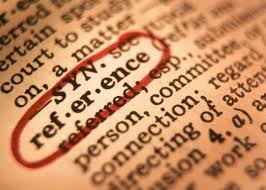
References: What you need to know

So you’ve gone through the application process, mastered the interview, and now the company is interested in you. But before you can embark on stepping up to take your new boss’ job (I kid,….sort of) you need to come up with some references so that the company can do it’s due diligence to see if 3rd parties will concur what they think they already know about you.

So here’s where you come in. Who do you select to be a reference for you? The simple answer here is that you should use former supervisors or other people who managed you, in order to be able to best demonstrate certain things. Your former bosses can typically be a future employer’s best source for how well you performed your job, how easy you were to work with or collaborate with, and what kind of potential you may have with the work you do, or what you could expand into in the future. They say that past behaviors are the best indicator of future behavior – take that for what you’d like, but this is how most employers see it.

Simple, right? Not so fast.

You really need to carefully select and vet the references that you give to a prospective employer. You should really be doing this prior to embarking on any interview process. Assumptions on who will give you a positive reference are a dangerous track to take. It’s recommended that you have conversations with each of the people that you want to supply as references, prior to doing so, so that you are able to gage who would benefit you most. Be sure to let them know that you would like to potentially use them as a reference, and if they would be amenable to providing a positive reference for you. This is a great time to take stock of where your areas for improvement are, and getting that information from these trusted reference sources. This allows you to get a picture of what they may say during the reference process, which also allows you to utilize that information in your interviews with the prospective employer. Especially if the topic is about an area of development for you. It gives some credence to your statements if the employer can see that you have a good handle on your areas of weakness, especially if it is backed up by a reference. This isn’t always a bad thing. Employers want to know that potential employees have a good handle on their strengths and weaknesses alike.

Be sure to keep up with your references often as well. Don’t be the person who drops a line every few years, to ask for a reference for a job that you had 10 years ago. I have a former boss that I worked for almost 11 years ago, who still is one of my chief references. Sure, it’s been many moons since I worked directly for him, but we talk every few weeks, and still collaborate on networking events. So, he has not only seen me grow professionally as a recruiter, but also as a networker, and someone who’s grown in the industry. He can speak to my career development, even if it was not all on his watch. It’s a mindset of keeping important professional contacts very close to you.

Lastly, give ALOT of thought to the person you use as a reference. Unless the company specifically asks for personal references (more likely in state or federal jobs), always err on the side of professional references, and particularly supervisors. Giving the name of your family member who you work with on the side, your co-worker, (unless extremely relevant), your co-coach of the local CYA Basketball team, etc. just isn’t going to help the employer that much. They want to know about you at work, and how you perform there. Personal references are usually used more so to assess character.

References should be one of those tools in your arsenal that are always prepared, ready and able to assist in putting you over the top with that job you really want. Like any other relationship you value, you have to cultivate and maintain it to get the optimal value.

Trust me, ask my references.


Bookmark and Share

Showing up late for an interview? There’s just no excuses.

I never understand it when a candidate shows up late for an interview. It’s a job interview, and presumably since you scheduled it, employers assume you want the job. I mean, I JUST don’t understand when a candidate shows up 30 minutes late and expects that the employer will still want to conduct the interview. Would you show up to your wedding 30 minutes late? (If the answer is yes, its likely best to stick with the singles scene for while)

While life indeed “happens” – traffic occurs (especially if you live here in DC!), kids get sick, and clocks lose power occasionally, there are things you have in your power to ensure that you can reduce the potential for you to be late for a job interview.

  • Leave with plenty of time. If you know that a commute to a certain area can be hectic, give yourself plenty of time to get there. Get there too early? I’m sure one of these places would be happy to take your $5.25 for a latte while you prepare further for the interview. Additonally, try to schedule your interview at non-peak times of the day if you are going to a place that is notoriously traffic-laden in the AM or PM rush hours.
  • Map it out and take a test drive prior to the interview. Saying that you got lost on the way to an interview tells an employer that you A. Don’t know how to use technology (specifically a GPS) OR B. Didn’t bother to map out the locale. With as much technology as we have on smart phones these days, everything can be found with a few slides of the thumb.
  • Have backup alarms to get you up well ahead of time. “I overslept” just doesn’t work for employers. You have an alarm clock, your cell phone, the old school telephone (yes, ask someone for a wake up call if that is a challenge for you)

Always have a plan and stick to that plan. You get one shot your potential employer to make your 1st impression. This is one of the easiest slip-ups to control, so take ownership of it. Employers remember who was late, and who stood them up. The memory of a good recruiter is a vast expanse that holds more long term tidbits than should be allowed by law. They will remember you. Make sure its for the right reasons.


Bookmark and Share

What Do Applicant Assessments Tell Us, Anyway?

You’ve seen it. Maybe you’ve lived it. Maybe you had to implement it, and you may even have taken it. The dreaded pre-employment assessment. They come in all shapes and sizes. Some of the more common types in the market are Wonderlic, Myers-Briggs, and Gallup. Sure, they are all legal, and legally defensible in court, and are praised by a vast amount of executives far and wide. But what do they really tell you?

Choices, Choices.

The types of information sought on these assessments can vary widely – from personality types, to sales acumen, to analytical skills. But in the end, how much does it really tell you about the employee you are about to hire. There are several areas to consider when looking at potentially using a pre-employment assessment.

1. What are you looking for?
If you are seeking people who have strong analytical skills, then an employment assessment that measures this might be a way to go. But without having to over-customize a solution, can you effectively get what you need? In most cases, a cookie-cutter assessment may seem like a one-size fits all, but it’s leaving out critical components about who is actually taking the assessment. A Director of Product Management may score vastly different from a Statistical Data Analyst, depending on how much of their day-to-day is spent in a purely analytical world. And, are you having your sales reps take the same assessment as these purely analytical candidates?

2. What kind of metrics are you assessing to validate the impact of these assessments on your hiring process?
Assessment without analysis is just testing. You have to look at your core metrics on this. If the point of testing is the reduce turnover in key critical roles, and to make sure that people in these roles are highly promotable, then you need to look at the data. Having detailed components about turnover, promotion rates, and performance reviews is critical in seeing how valuable this assessment toll has proven. If you can’t put a finger on seeing where the value was added (i.e. a 15% reduction in turnover in the inside sales group), then you just have a bunch of test scores. Considering the pricing on many of these products, that’s an awful lot of money spent on anecdotal data. Considering that HR is already a department that most companies consider overhead, we have to spend wisely.

3. Do executives put more weight in the assessment more than the people interviewing and selecting the candidate?
If you have C-Level people weighting the outcome of the assessment ahead of the other critical stages of the interview process (Resume, experience, interview & interview feedback, references, and background checks), then something is wrong. You’ll almost inevitably lose proven and potential “A” players because they refuse to be judged from an assessment, and/or you let them get away because some test score said they weren’t up to snuff. “A” players don’t have to tolerate the cynicism that comes with being judged on test scores alone.

I’ve worked in companies where if the test score was not a certain number, there was no hire – end of story. I think about all the people in the world who are great at writing the 30 page paper, but who are not good testers. Conversely, how many people can ace tests, but not come up with core analytical takeaways from a project? It’s a balance, and as I said above, needs to be looked at as PART of the process, not as the litmus for the WHOLE process.

4. Is the assessment linked to your organizations key indicators of success and performance?
If it is, then you can truly use this as a potential indicator for future success. Dr. Charles Handler really does some nice work in presenting views in this arena. If you’re seriously considering implementing something, his research and articles might be a good spot to start. He has a great deck on Slideshare, that might be worth reviewing.

Assessment for the sake of saying “well, we tested them, and they did well/poor” is a waste of valuable interviewer and recruiter time. I’m not 100% in favor on pre-employment assessments, nor am I 100% against. As with most people, I’m somewhere in the middle.

Please feel free to share your thoughts on this.


Bookmark and Share

You are the Red-Headed Stepchild. Embrace it.

Recruiting is classically the red-headed stepchild of any organization. It’s just a fact of life. You’ve known it, you’ve either embraced it or you’ve spent the better part of your career trying to fight it. But when it boils down, we hear the same things. “Its an operational role”, “They are not a revenue-generating department” “All they do is shuffle paperwork”. Yep, all of these sound familiar to you if you have been in recruiting for any significant period of time.

Is it true? Probably not. Think about it – sure, we are an operational unit, and yes, we probably are responsible for more deforestation than any other team in a company (But we’re all starting to digitize, right?!?). What I cannot get over, and trust me I’ve fought this battle in my head for years, is the “non-revenue generating” claim. Exactly who do you think produces the candidates from thin air who DO generate the revenue? Without a strong recruiting function, there aren’t any “rainmakers”, “sales kings” or any other fancy name you want to derive. We may not hit the P&L as “sales”, but almost all of our jobs involve a level of sales, and showmanship.

What we really need to do (and this includes me, TRUST ME), is to just embrace the fact that there are some perceptions we may just never overcome, no matter how much data and “metric-y” information we provide. What you can do, is to build a trust and rapport with those in your organization who will ultimately recognize the value of a strong recruiting function. By doing this, you’ll be building an army of supporters who can voice to the organization that they just can’t live without you. Having that voice be speaking on your behalf will ultimately get you the seat at the table you so desperately want. That, and solid data to prove what you contribute. Not just time to fill, and applicant source data. Data that speaks to the revenue generating side – cost effectiveness, business savvy with contracts (job boards etc.) How much money did you save by employing your vast set of skills. Sales folks don’t just say “hey I closed 3 deals this month!”. They say “hey I closed 3 deals this month worth $425,000!” You can be an efficient recruiter, but be sure to quantify HOW efficient you’ve been.

If you don’t, the beatings will continue.

Authors Note:
Sadly, I wasn’t sure sure how the phrase “red-headed stepchild” came about, but I got curious and looked. You should too. Looks like we have Charlie Sheen to thank, at least in part.
http://bit.ly/9Z6BWK

Thanks Charlie - you've doomed us all.


Bookmark and Share